
Partners
Aligning research, industry, and communities across a shared bioindustrial ecosystem.
Partnerships connect universities, manufacturers, communities, and funders to a single, coordinated system: demand signals, consumer markets, research, processing, and regional deployment. The Foundation works alongside American Fiber Group and Fiber Foundry so partners can move from idea to field to factory without building everything alone.
One Ecosystem, Multiple Entry Points
Partners plug into a coordinated structure:
Now We Evolve (NWE) – builds awareness and demand for fiber-based solutions.
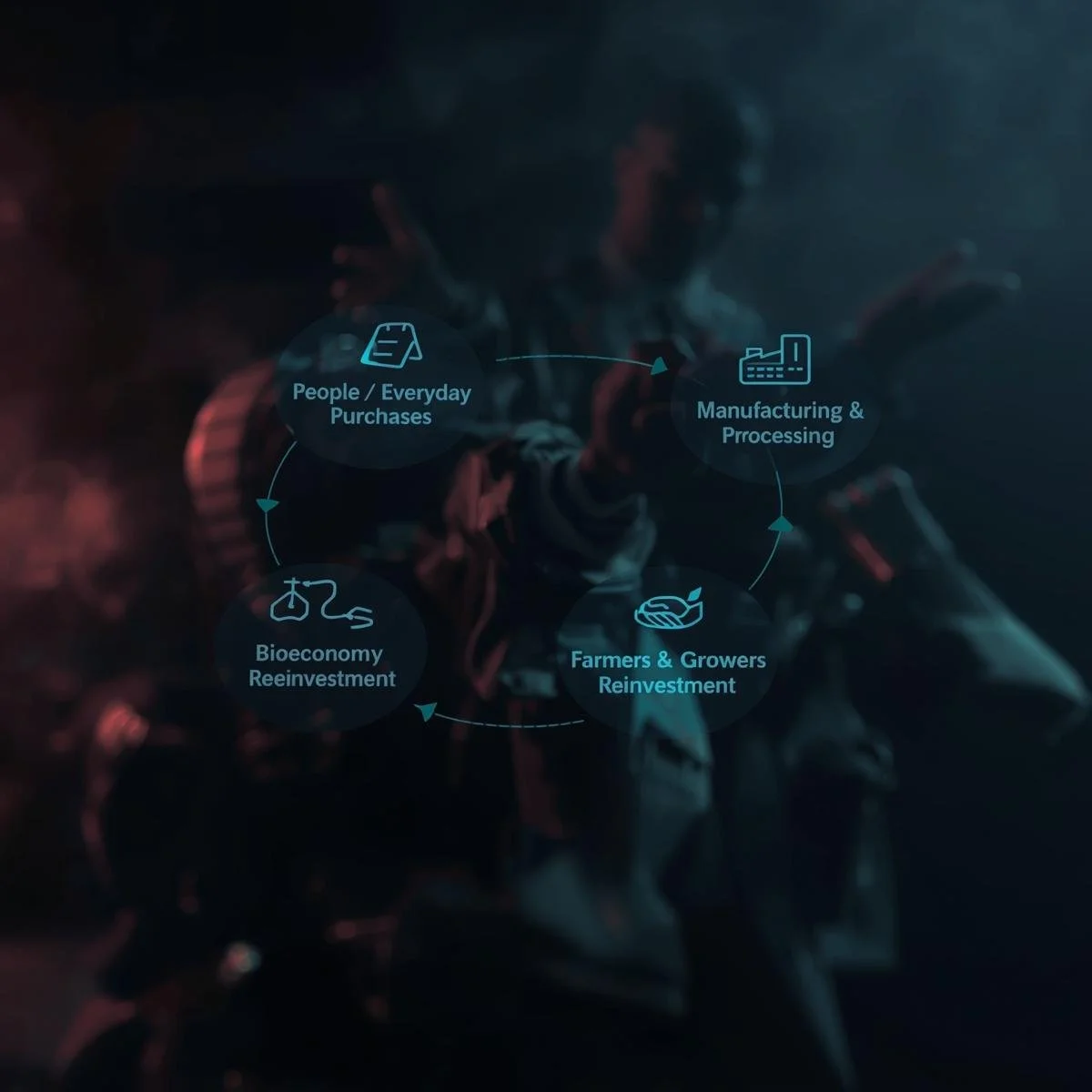
Fiber Foundry (FF) – channels consumer spending into hemp and bamboo products, sending a percentage back to the Foundation.
Bioeconomy Foundation (BF) – funds research, pilots, and rural bioindustrial programs.
American Fiber Group (AFG) – develops and connects processing hubs, manufacturing capacity, and industrial deployment.
University labs, manufacturers, rural coalitions, and funders work with the Foundation to design projects.
AFG becomes the industrial bridge, taking research outcomes, materials, and pilots and turning them into processing capacity and manufacturing at regional hubs.
Through American Fiber Group’s DBX (the Domestic Biofiber Index) partners gain access to verified material grades, standardized quality benchmarks, and FEOC-compliant procurement pathways. DBX connects university research, farmer output, and processor capability to manufacturers looking for stable, domestic fiber supply.
Partner Categories
Universities & Research Labs
Work with the Foundation to design and fund research. When those projects yield usable materials or processes, AFG helps connect them to processing lines and manufacturers.
Manufacturers & Industrial Partners
Coordinate with AFG to evaluate fiber feedstocks, adapt equipment, test runs, and scale production. The Foundation supports early research, testing, and pilot work.
Rural & Regional Coalitions
County development teams, cooperatives, and local alliances join to attract fiber hubs, create jobs, and anchor long-term investment. Foundation programs and AFG site selection work together here.
Agriculture & Land Stewards
Farmers and landowners bring acres, experience, and regional knowledge. Foundation programs support transition, while AFG connects those acres to future processing demand.
Foundations, Donors & Grantmakers
Funding partners provide capital for research, pilots, and infrastructure. Contributions can align with specific regions, materials, or program areas.
Institutions & Public Sector
Schools, community colleges, workforce boards, and municipalities partner on training, local workforce pipelines, and site-based projects.

How Partner Projects Are Funded
Partner projects can leverage multiple funding sources:
Bioeconomy Foundation: seed funding for research and pilots.
Community Crowdfunding: parents, alumni, local businesses, and residents backing student and regional projects, with proportional royalty shares.
Grant Matching: where available, public or philanthropic grants match community and Foundation contributions.
Industrial Participation: AFG and manufacturing partners contribute capital, equipment, in-kind support, or long-term offtake commitments.
The same structure that supports student and faculty work extends into site selection, pilot lines, and regional projects that AFG helps lead on the industrial side.
When research, acreage, or processing pilots hit DBX-qualifying thresholds, materials enter AFG’s procurement pathway. This allows partners to participate in the national grade system used for contracts, regional hubs, and supply chain development.
Why Organizations Join the Ecosystem
Partners gain:
access to early-stage research and pilot opportunities
clear routes into processing and manufacturing via AFG
visibility in emerging fiber-based markets
community-connected project design and deployment
structured pathways to FEOC-compliant, domestic sourcing
a shared framework for royalties, returns, and long-term value
alignment with universities, farmers, and rural communities in one system.
access to DBX material grades, procurement standards, and participation pathways that connect research results to industrial buyers

Start a Conversation
Organizations interested in partnering can begin by sharing:
their role (research, manufacturing, regional, funding, etc.)
current capabilities
regions or communities they care about
materials, products, or applications they want to explore
From there, the Foundation and AFG help define pilot opportunities, research needs, and potential funding paths.
